LAB - Center for Language, Attention, Belonging
The Language LAB has become a student-led research space where, through language, researchers approach ideas of human communication across linguistic and cultural boundaries, with meaningful questions and the desire to expand upon them—often alongside faculty. Student researchers are multilingual, motivated, and passionate about how these ideas of communication are challenged in the age of AI. They are encouraged to make a difference on campus and are willing to engage with technology, not as a means of cognitive surrender, but rather a catalyst or call to action.
In the Language Lab
Our Staff
Our staff are available during office hours to help you.
Learn more about our staff in their bios below.
Do not hesitate to write or talk to them any time.
“We are all storytellers. We live in a network of stories.
There isn't a stronger connection between people that storytelling.”
—Jimmy Neil Smith
-
 Yashii VelseyAdministrative Assistant, Fall 2026
Major: Religion
Year: Senior
Home: New York, NY
Email: [email protected]
Yashii Velsey
Administrative Assistant, Fall 2026
Major: Religion
Year: Senior
Home: New York, NY
Email: [email protected]
Biography: Yashii Velsey grew up in New York City and Tokyo, Japan. She is currently a senior at Bard College majoring in Religion with a secondary focus of Asian Studies, and began working at the Language Center in the Fall 2025 semester. Her native languages are Japanese and English.
-
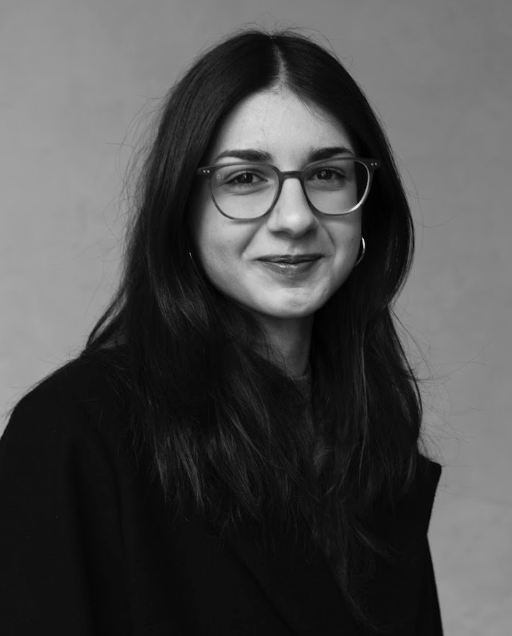 Nia BeradzeStudent Researcher
Major: Politics and Psychology
Year: Sophomore
Home: Georgia
Email: [email protected]
Nia Beradze
Student Researcher
Major: Politics and Psychology
Year: Sophomore
Home: Georgia
Email: [email protected]
Biography: -
Mehria Reshta
-
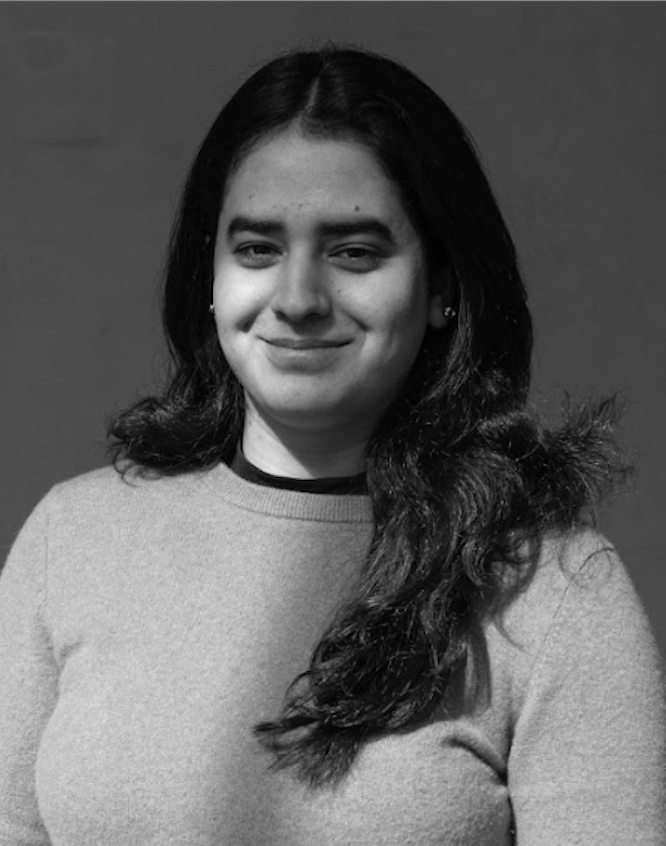 Arghawan BaniFormer Administrative Assistant, Spring 2026
Major: Psychology and Economics
Year: Senior
Home: Afghanistan
Email: [email protected]
Arghawan Bani
Former Administrative Assistant, Spring 2026
Major: Psychology and Economics
Year: Senior
Home: Afghanistan
Email: [email protected]
Biography:
Student Projects - Spring 2026
Japanese, Korean, & the Microcosms of Formality - Zoe Gibson and Yashii Velsey
This project investigates how Japanese and Korean, two languages marked by hierarchical speech registers, are taught and learned in the classroom as well as how they may be impacted by culture and technology. We will explore how gestures of politeness and gender may be erased, emphasized, or transformed by AI, and how they are categorized and classified for language learners. With the help of students and faculty fluent in or native to these languages, we demonstrate what cultural nuances are under or over-evaluated by technology and how this will impact the future of academic language learning.
When AI Speaks for Us: Cognitive Surrender and Language Production - Nia Beradze and Nia Jorbeandze
This project examines how interaction with AI writing tools shapes human language production and cognitive engagement. Drawing on Marshall McLuhan’s concept of technology as an extension of the self, it considers whether AI functions simply as a tool for cognitive offloading or promotes a form of “cognitive surrender,” in which users adopt externally generated language as their own. Grounded in psycholinguistic questions of authorship, effort, and language generation, the project asks whether AI merely supports thinking or begins to restructure internal language processes by encouraging reliance on externally organized thought. These dynamics carry important implications for education, particularly in how AI is integrated into learning environments while still preserving spaces for independent idea formation without immediate AI intervention.
Support or Substitution? The AI Debate in Higher Education - Batool Jalal
This project explores whether universities should integrate AI platforms such as BoodleBox into their academic systems. Rather than advocating for or against integration, my project intentionally avoids taking a definitive position. Instead, it examines the potential benefits and risks, ranging from enhanced learning and collaboration to concerns about dependency, academic integrity, and equity. The goal is not to provide answers, but to spark critical curiosity and bring this question to the forefront of academic discussion, encouraging institutions to thoughtfully consider the implications of AI in higher education.
Accessibility
We are dedicated to making language learning available to all students regardless of learning needs, disability, or preferences. All office interns work to gather multimedia resources from around the world for language students. If you need any assistance accessing material we have collected, or need help finding material available in a different way, please stop by the office and we’ll be happy to work with you to fit your needs.